
On Indigeneity: A response to Nick Hayes

I recently watched a clip of Nick Hayes talking at The Hay festival 2026. His liberal use of the term Indigeneity raised some serious concerns.
I fully support the Right To Roam movement and look forward to seeing the recent movie Our Land, which features Hayes.
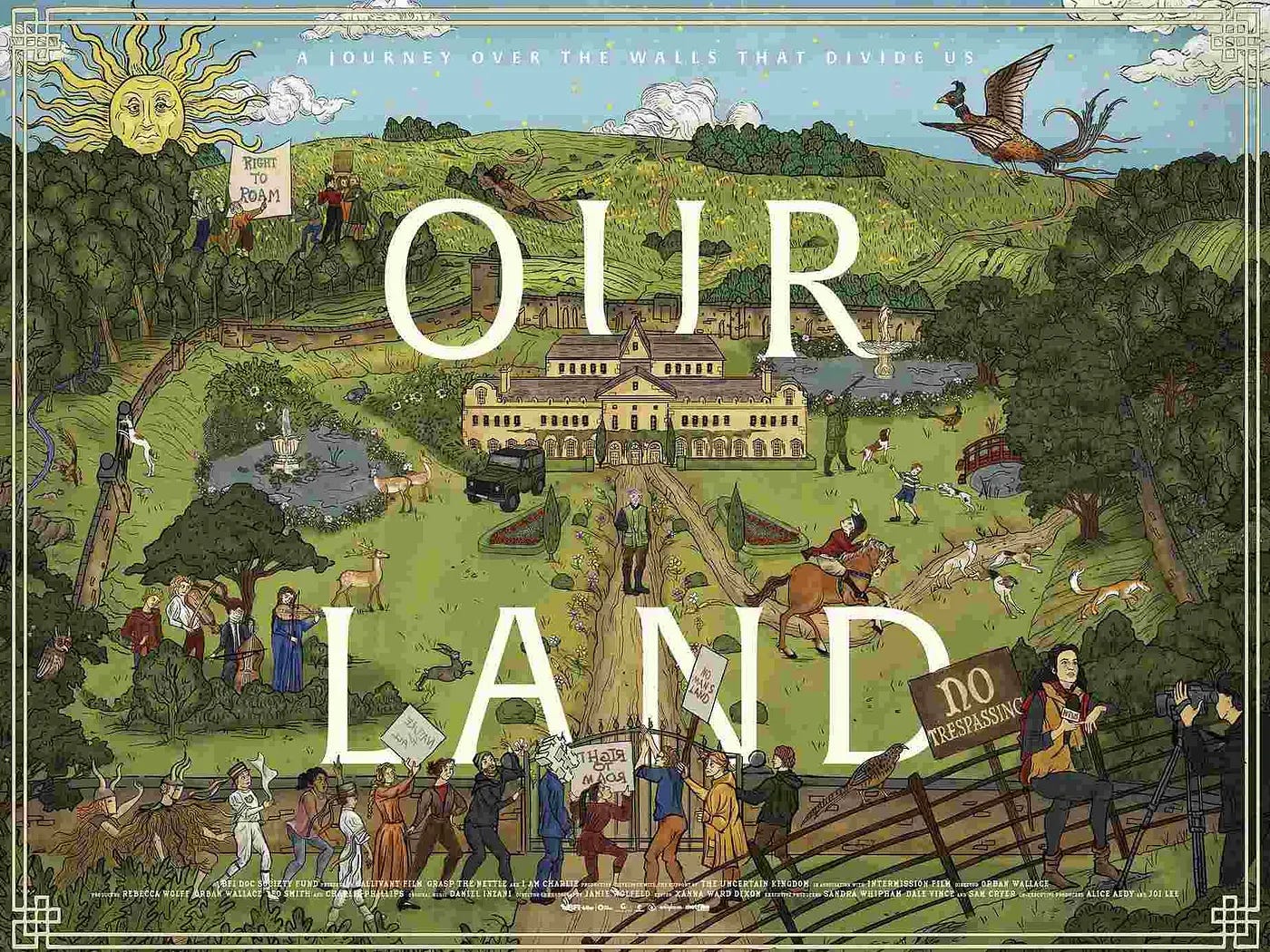
Land is at the centre of all human culture. Who owns the land and how they claimed ownership is a fundamental question we should all be asking.
“All power emanates from the land”…
…“when you rip the people from the earth, you also rip the earth from the people”.
Jessica Ashman
And yes, that happened here in England too but the land was not taken from a coherent Indigenous culture.
My peasant ancestors on my Mother’s side can be traced back to Yeovil in the south west of England about 250 years ago. The capitalist colonial project was well under way by then. It is difficult to measure the true impact of Land Enclosures on my ancestors (read Silvia Federici), if indeed my matrilineal peasantry foremothers were even here in 1600. I’ll never know. My Father’s family were Ashkenazi Jews who came to the UK from somewhere in Ukraine and Poland around 1900. They landed in Newcastle and migrated north to Glasgow where my father was born.
I was born in Bournemouth to baby boomer parents. I have no grandma, who passed on knowledge from her grandma, who passed on cultural specific stories from her grandma and on and on and on and on. You might well have some cultural aspects that go back hundreds of years. But these are broken lines… ‘Partial connections’ (Strathern 1994).
Contested imagined spaces.
Unless you are landed gentry, you can only go so far back. This is the story of the vast majority of us. This is the story of being British, this is the story of being English.
However much we crave for that connection with the land we must avoid, at all costs, replicating a colonial mentality.
In his talk Hayes says England was the first land to be colonised by the English Aristocracy, but this statement ignores the complexity of these isles. Does Hayes mean the Normans when he talks about the English Aristocracy? At what point did they become English? Was the Roman conquest of Briton not a colonisation of The Celts, themselves descendants of a mass immigration.
In truth,
This island has a 40 000 year story of migration, invasion and population replacement. As the story goes, after the Romans came the Anglo Saxons, then the Vikings before William the Bastard divided up our land and gifted it to his favoured Barons (who themselves were Germanic). Even talking like this in grand narratives doesnt do the story justice. Evidence shows the British Isles was a melting pot of Europe for a millennia.
Hayes does make an effort to distance his narrative from any potential accusations of racism by saying this has nothing to do with skin colour or DNA. He also speaks of centring marginalised communities. But this does not reassure me that a colonial mentality is not being replicated.
If we have any hope of changing our relationship with Albion then we cannot afford to be lazy with our white male privilege.
Hayes goes on to say that a lived process, working with nature and being situated on the land of your locality ‘that’s Indigeneity’.
No it is not.
Economist Paul Collier made the same mistake when discussing this with Mehdi Hasan in 2022 saying, “there are various definitions you can have” for the term Indigenous.
No there is not.
This narrative may seems compelling and seductive but it sounds like Elon Musk and his bootlickers. And that way fascism lies.
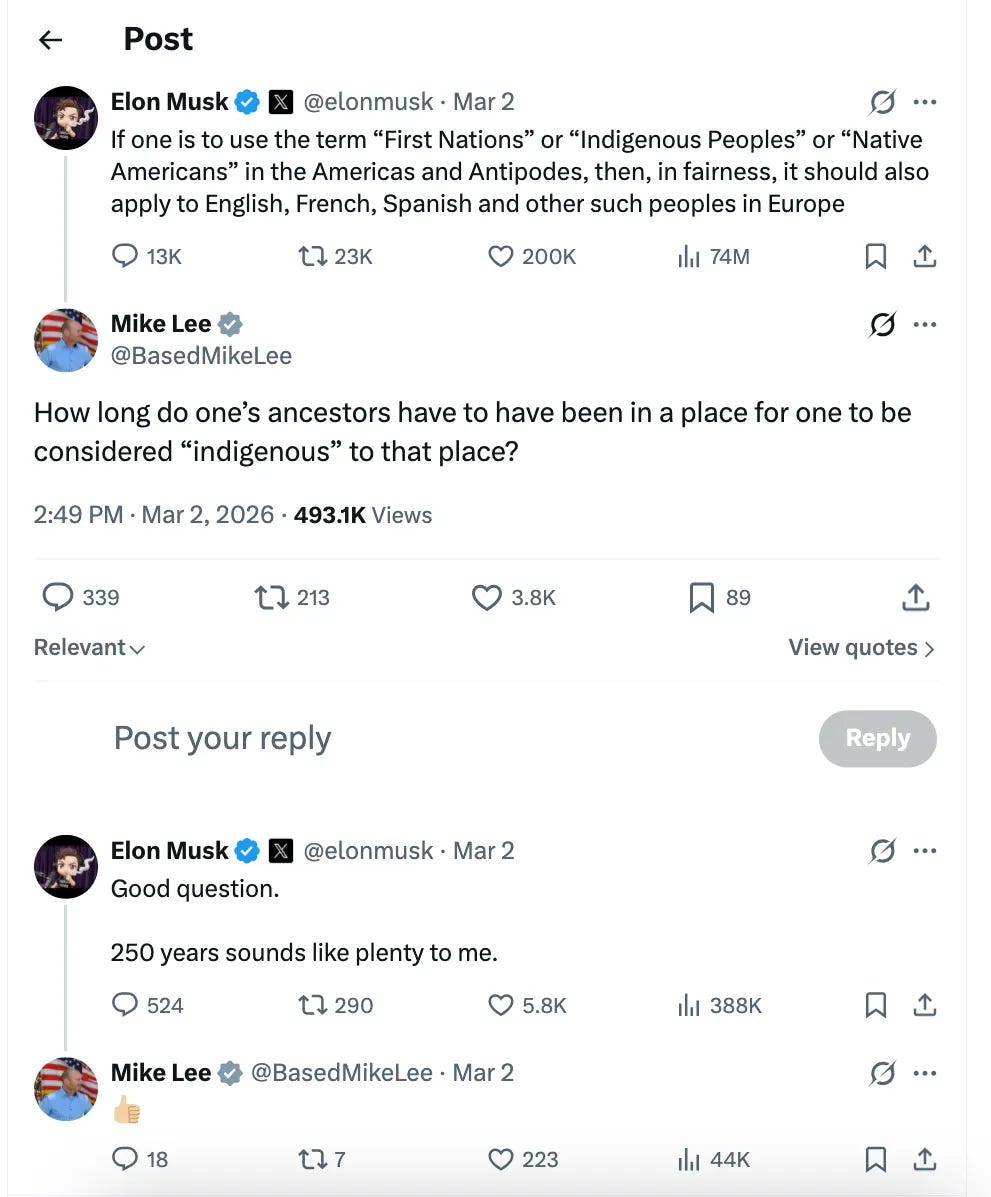
Perhaps, we just need a refresh.
First important thing to note is Indigenous is a proper noun and should be capitalised.
It is important to avoid essentialising “Indigenous epistemologies as singular and static” (Price & Chao 2023:187) as “many distinct populations whose experience under imperialism have been vastly different” (Tuhiwai Smith 1999:6). However, there are certain markers that define what it means to be Indigenous.
A continuous traceable lineage that existed pre-colonialism and has survived through the violent and ongoing process of colonial capitalism. A historical continuity that connects a person and/or community with a tangeable ancestry that has maintained a relationship with -
specific regions
languages
rituals
plant medicines
foods
Another important marker is that Indigenous communities have distinct political and economic systems and are not defined by a ‘national’ identity.
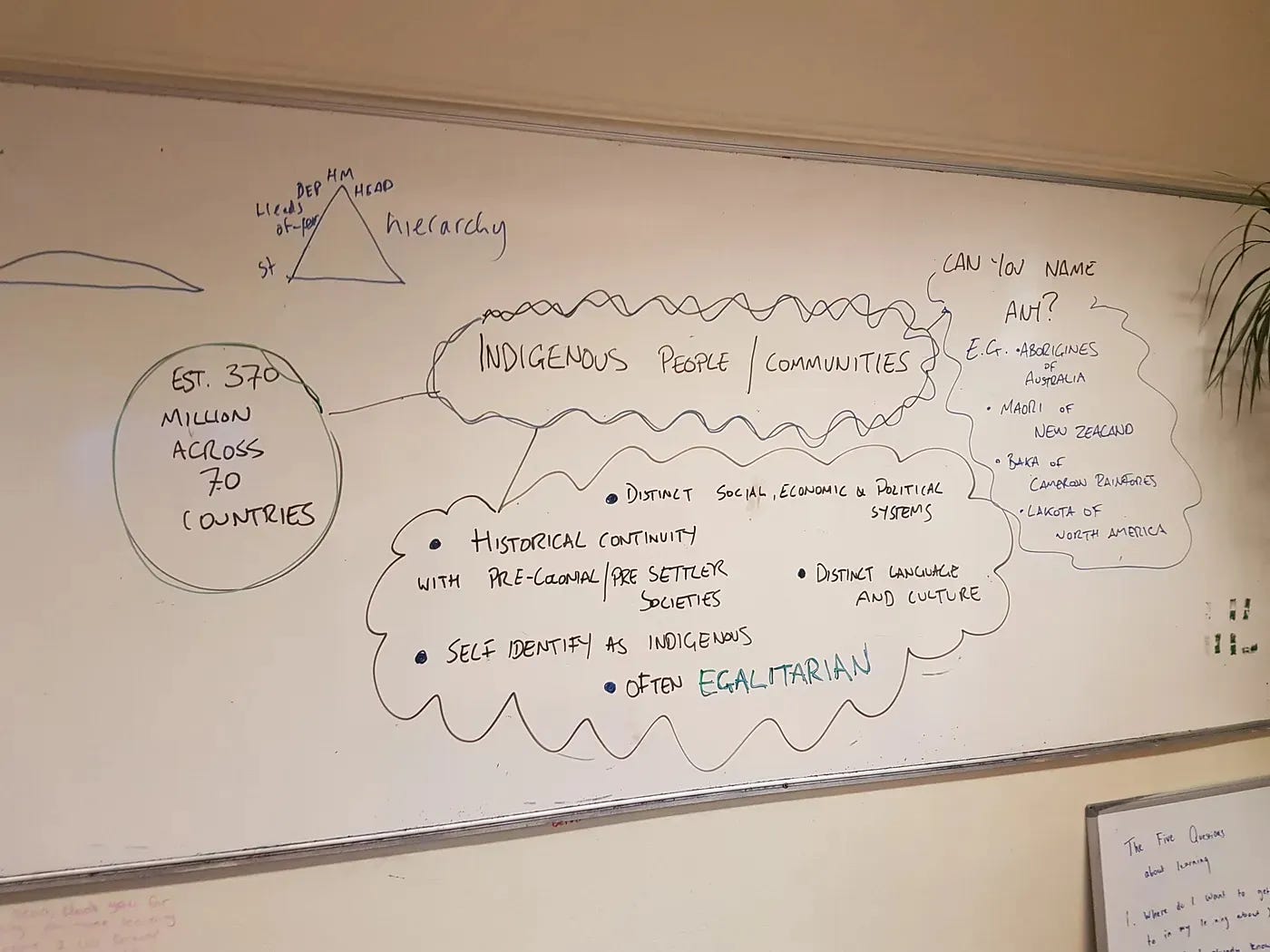
Western narratives have stolen so much from Indigenous peoples. The term Indigenous is not ours to claim. We must leave it alone.
Be clear there is violence in this term when using it to define some lost imagined English or British culture.
We have to construct something new and that is Ok….
I do not deny the generational trauma that the last 500 years of subjugation by the emergence of colonial capitalism and the modern nation state, has had on the descendants of the British peasantry. Myself included. And yes it is a huge challenge to develop an identity.
I have walked around the Rollright Stones counting and counting.
I dream about how ‘my ancestors’ might have sat in in the centre,
beneath the same stars
telling stories of the Whispering Knights.
Eating bread made from local barley and drinking beer made from herbs harvested locally.
It is fine to be informed by the folklore of this island, in fact I would encourage it! Learning about the plant medicines that were once used and rekindling that relationship is a perfect example. This is lost knowledge that must be reclaimed. But that doesn’t lead us to Indigeneity. At least not in the short term. It is not just about plucking a number out of the air. We have to think in plant time…
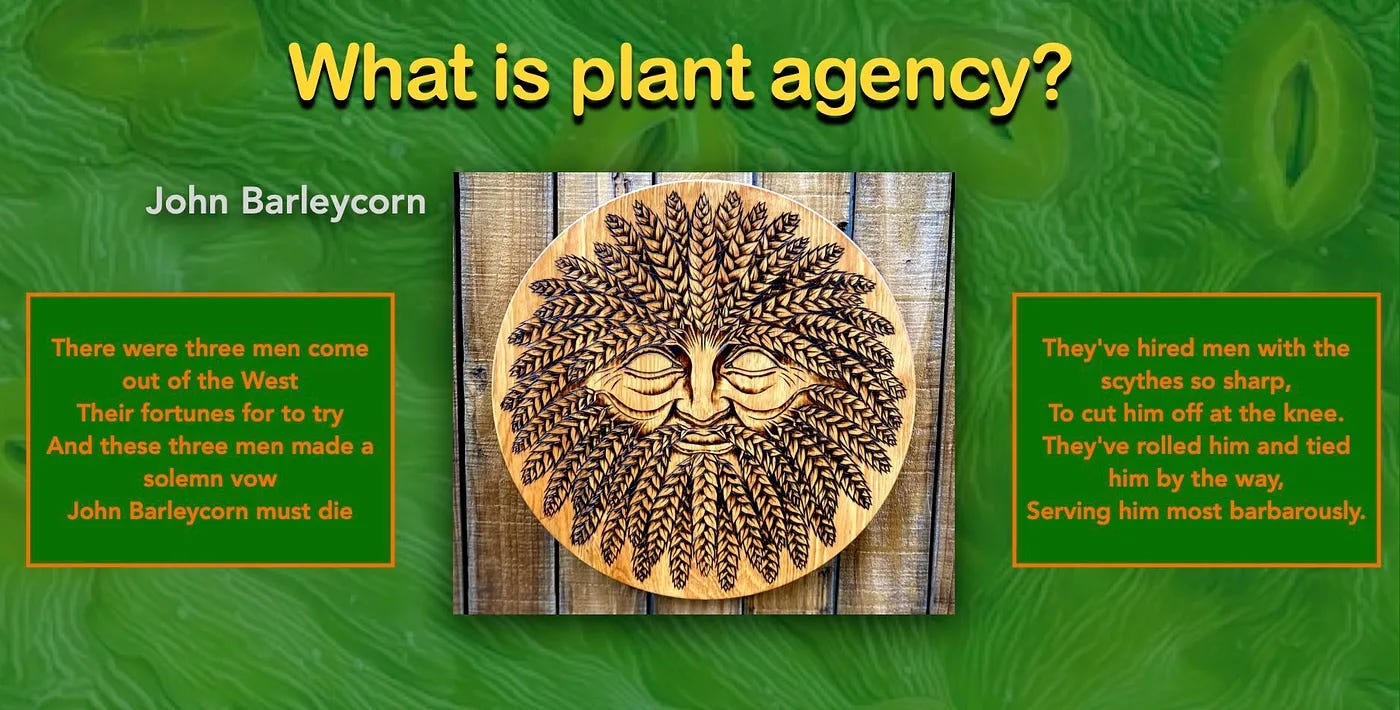
John Barleycorn. A character from British folklore. Woodcarving by u/Grimnirs_Beard (Reddit)
Maybe, after many generations, hundreds and hundreds of years nurturing an intimate and reciprocal relationship with the land, understanding our place in the more-than-human world…
Globalisation has happened and we can only go forward. We haven’t been here before.
We don’t need to legitimise our right to a relationship with the land with an imagined Indigeneity. Everyone who is here now and everyone to come, has that right.
We must do better with our language. In my research when discussing the relationship herbalists have with plant medicine I like to use non-Indigenous traditional knowledge. It may not be perfect but it is the best I’ve come up with so far. It may well change.
Getting stuck in romanticism is a bad spell.
Let’s break that spell and cast a new one.
References:
Price, C. & Chao, S.(2023). Multispecies, More-Than-Human, Non- Human, Other-Than-Human: Reimagining idioms of animacy in an age of planetary unmaking. Exchanges: The Interdisciplinary Research Journal, 10(2), 177–193.
Strathern, M. (2004). Partial Connections. 2nd Edition. Altamira Press.
Tuhiwai Smith, L. (2021). Decolonizing Methodologies: Research and Indigenous Peoples. (Third ed.). Zed Books. (1999)
Thank to Han, as always, for helping shape these words.
Great piece! I think about this a lot. If white people want to claim Indigenous identity they can also claim Indigenous reality: high rates of incarceration, death in police hands, poverty, suicide, racism, child removals, ongoing genocide. Instead of fantasising about “our” lost relationship to the land we should work together now to end all violence.